
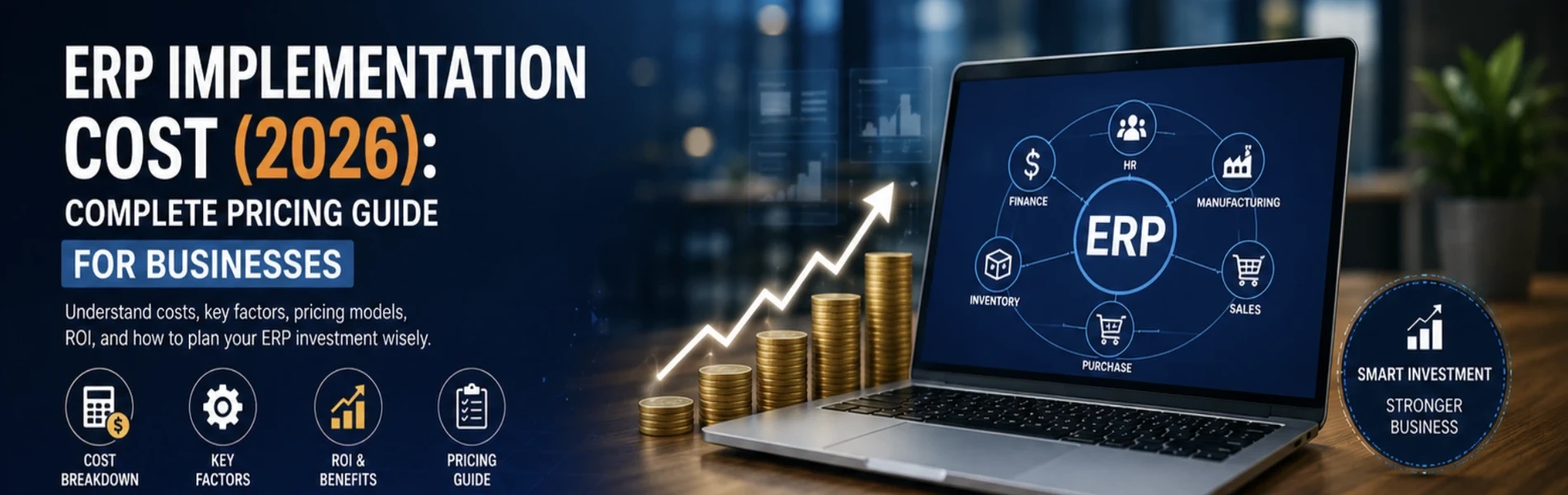
Implementing an Enterprise Resource Planning (ERP) system is one of the most important investments a business can make. Whether you're a startup, a small business, or a large enterprise, an ERP system can streamline operations, improve productivity, and provide real-time visibility across your organization.
The Core Question:
How much does ERP implementation cost?
The answer depends on various factors, including company size, business complexity, number of users, required customizations, integrations, deployment model, and implementation partner.
Why Businesses Invest in ERP
Modern businesses manage finance, inventory, purchasing, sales, manufacturing, HR, CRM, and projects. Managing these operations through spreadsheets or disconnected software often creates inefficiencies.
An ERP system provides:
- 🔹 Centralized business data
- 🔹 Real-time reporting
- 🔹 Better collaboration
- 🔹 Reduced manual work
- 🔹 Higher productivity
- 🔹 Improved customer service
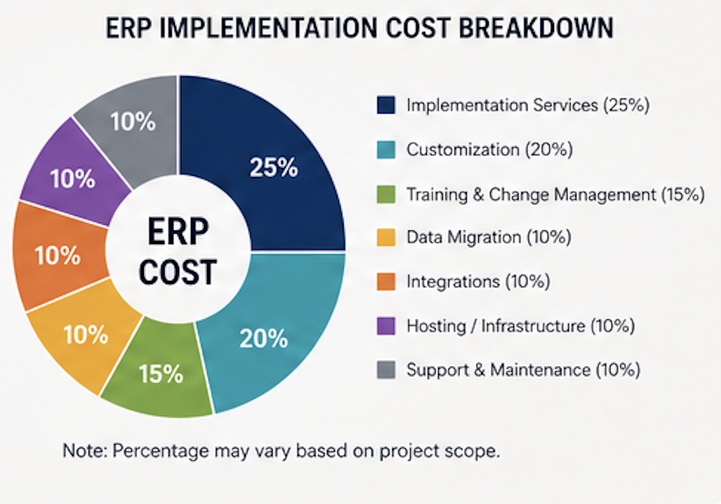
Average ERP Implementation Cost
| Business Size | Estimated Implementation Cost |
|---|---|
| Startup | $3,000 – $10,000 |
| Small Business | $10,000 – $40,000 |
| Medium Business | $40,000 – $150,000 |
| Large Enterprise | $150,000 – $1,000,000+ |
*Note: These estimates vary depending on business requirements and implementation scope.
Factors That Affect ERP Implementation Cost
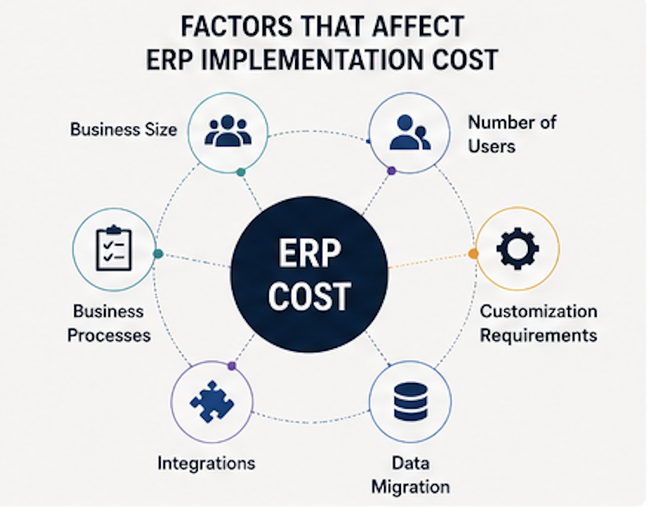
1. Business Size
Larger organizations require more workflows, reports, approvals, departments, and user management, increasing implementation effort.
2. Number of Users
The number of users affects configuration, permissions, security, user training, and long-term support.
3. Business Complexity
Businesses with manufacturing, warehouse management, multiple branches, projects, or international operations usually require additional implementation work.
4. Customization Scopes
- Custom Fields
- Approval Workflows
- Reports & Dashboards
- Print Formats
- Customer & Supplier Portals
- Mobile Applications & APIs
Customizations should always support business goals rather than simply replicate old manual processes.
5. Data Migration Phases
- Customer & Supplier Profiles
- Products & Inventory Data
- Accounting Balances
- Employee Profiles
- Historical Transactions
Migrating data from legacy architecture is one of the most vital phases of deployment.
Third-Party Integrations
Many organizations integrate ERP with existing tools:
Hidden Implementation Costs
- Employee Training
- Process Documentation
- Change Management
- Testing & Bug Mitigation
- Data Cleansing
- Project Management & Go-Live Support
Cloud ERP vs On-Premise ERP
Cloud ERP
- Lower Infrastructure Cost
- Automatic Backups
- Easy Remote Access
- Highly Scalable
- Faster Deployment
On-Premise ERP
- Complete Infrastructure Control
- Internal Security Management
- Custom Server Configuration
- Suitable for strict compliance needs
Why ERPNext is a Cost-Effective ERP Solution
ERPNext is one of the world's leading open-source ERP platforms, helping businesses automate operations while keeping implementation costs under control.
Because ERPNext is open source, organizations can invest more in improving business processes rather than spending heavily on software licensing fees.
How to Reduce ERP Costs
- Clearly define business requirements early.
- Standardize native business processes.
- Avoid unnecessary code customizations.
- Clean data extensively before migration.
- Train key users early in the cycle.
- Implement modules in phased rollouts.
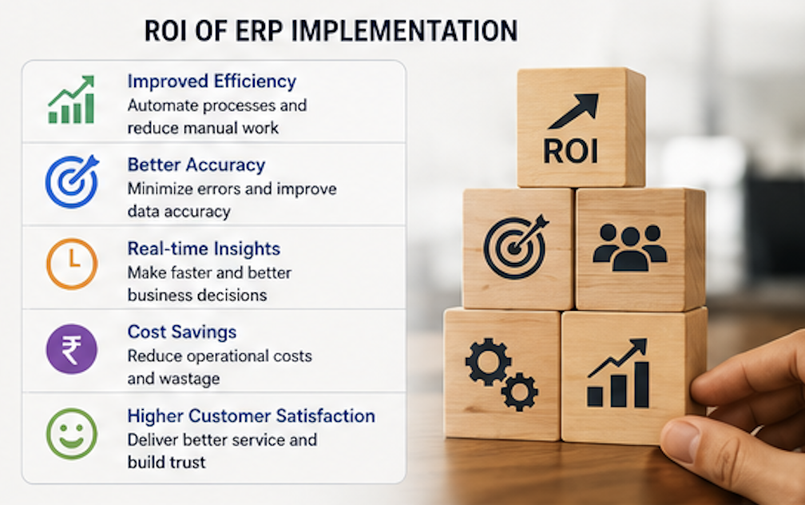
Return on Investment (ROI)
A successful ERP implementation provides measurable long-term metrics:
- Improved inventory accuracy
- Faster financial reporting turnaround
- Lower enterprise operational overhead
- Real-time dashboards for management decisions
Frequently Asked Questions


No comments yet. Login to start a new discussion Start a new discussion